
Health Education Resources

- Details
- Category: Health Education Resources
This month, we lift up every member of our community who carries the weight of a blood cancer diagnosis - and every family walking alongside them. September is Blood Cancer Awareness Month, and for us, it means more than a red ribbon. It means showing up for one another, learning what we can, and trusting that knowledge is a form of love.
Blood cancer ranks among the most common and life-threatening cancers affecting Americans today. Earlier diagnosis saves lives, and awareness makes earlier diagnosis possible. This month, we commit to spreading that awareness - within these walls and beyond them.
A Word for Our Community
Blood cancer touches Black Americans with particular force. Multiple myeloma, one of the three main blood cancer types, affects Black Americans at roughly twice the rate of white Americans. Black patients also tend to receive diagnoses at later stages, when treatment becomes more difficult. Knowing this calls us to action - schedule that checkup, ask those questions, and encourage the people you love to do the same.
What Is Blood Cancer?
Blood cancer refers to a group of cancers that affect the blood, bone marrow, and lymphatic system. Three main types exist:
- Leukemia: Affects the blood and bone marrow by producing abnormal white blood cells.
- Lymphoma: Targets the lymphatic system, including the lymph nodes and vessels that fight infection.
- Myeloma: Impacts the plasma cells in the bone marrow, which produce antibodies to fight infections.
These cancers prevent the blood from performing its vital functions, including fighting infections and producing new cells, which weaken the body's immune system over time.
How Is Blood Cancer Diagnosed?
Early detection gives patients the strongest path forward. Several tests and procedures confirm a diagnosis:
- Blood tests: Check levels of white blood cells, red blood cells, and platelets. Abnormal levels signal a need for further evaluation.
- Bone marrow biopsy: A sample of bone marrow reveals whether abnormal cells are present.
- Imaging tests: X-rays, CT scans, and MRIs show whether cancer has spread to other areas.
- Genetic testing: Identifies specific genetic mutations that may indicate cancer.
Signs and Symptoms
Blood cancer symptoms often resemble those of less severe conditions, which makes awareness so important. Common signs include:
- Fatigue: Feeling extremely tired and weak, even after rest.
- Frequent infections: A weakened immune system increases vulnerability to illness.
- Unexplained weight loss: Rapid weight loss with no change in diet or activity.
- Bruising or bleeding: Easy bruising or bleeding from gums or nose.
- Night sweats: Excessive sweating, particularly at night.
- Bone pain: Pain in bones or joints, especially the spine.
- Swollen lymph nodes: Painless swelling in the neck, armpits, or groin.
If any of these signs feel familiar, schedule an appointment with your doctor. Early conversation leads to earlier answers.
Taking Care of the Body God Gave You
Proactive health choices give your body its best foundation. Regular checkups - including routine blood tests and physical exams - catch changes early, when intervention carries the greatest impact. Staying active, eating well, and keeping a strong immune system all support your body's natural defenses. Reducing exposure to harmful chemicals, including benzene found in some industrial products, further protects your long-term health. Each healthy choice honors the life you carry.
A Closing Word
We have the assurance that we don’t face a diagnosis alone. We pray for those in treatment, for the caregivers holding families together, and for those still waiting on answers. May this month move us from awareness into action - scheduling appointments, checking on neighbors, and lifting one another in prayer. We are stronger together, and together, we will meet this moment.
"Beloved, I pray that you may prosper in all things and be in health, just as your soul prospers."
- 3 John 1:2
Sources:
Blood Cancer United
International Myeloma Foundation
Lymphoma Research Foundation
- Details
- Category: Health Education Resources
Sickle Cell Disease (SCD) is a blood disorder that distorts red blood cells into a sickle shape, causing painful crises, organ damage, and shortened life expectancy. It affects an estimated 100,000 Americans, with the highest impact in the Black community.
And yet, it doesn’t receive the same visibility, funding, or advocacy as other conditions.
Awareness matters because stories matter. Behind every statistic is a child missing school for hospital stays, a parent praying through sleepless nights, and a family learning to live with uncertainty.
Why Sickle Cell Awareness Month Matters
According to the CDC, about 1 in 365 Black babies are born with Sickle Cell Disease, and about 1 in 13 Black babies are born with the trait.
Sickle Cell Awareness Month exist because:
- Too many people don’t know if they carry the sickle cell trait.
- Treatment options are still limited compared to the need.
- The disease is often overlooked in mainstream health conversations.
When we talk about Sickle Cell Awareness Month, we’re pushing for visibility, equity, and compassion, three things that can change lives.
The Human Side of Sickle Cell
It’s easy to quote statistics, but it’s harder to sit with the stories.
Sickle Cell doesn’t just cause medical pain; it creates emotional, financial, and social struggles. Children often miss large portions of school. Adults face job insecurity when health challenges flare up. Families carry invisible weight in the form of hospital stays, uncertainty, and exhaustion.
Advocacy, Grief, and the Black Community
Sickle Cell disproportionately affects the Black community, yet historically it has not received the same research dollars, visibility, or urgency as other diseases. This lack of equity is painful, and it makes advocacy even more necessary.
Grief and advocacy often go hand in hand. Families who’ve lost loved ones to Sickle Cell complications often turn their grief into activism, pushing for better treatments, supporting awareness drives, or creating foundations in their loved one’s name.
Healing Through Awareness
Awareness months remind us that we’re not alone…in advocacy, in loss, or in survival.
For those living with Sickle Cell, awareness reduces stigma. It helps families find resources and validation. For those grieving, awareness reminds us that our loved one’s life mattered…their name, their story, their legacy.
Healing isn’t just about erasing pain. It’s about carrying it differently. And when we raise awareness, we shift the weight together.
Sources:
- National Black Church Initiative
- Sickle Cell Disease Association of America
- Details
- Category: Health Education Resources
What Is National Wellness Month?
National Wellness Month is dedicated to encouraging people to take proactive steps toward improving their physical and mental well-being.
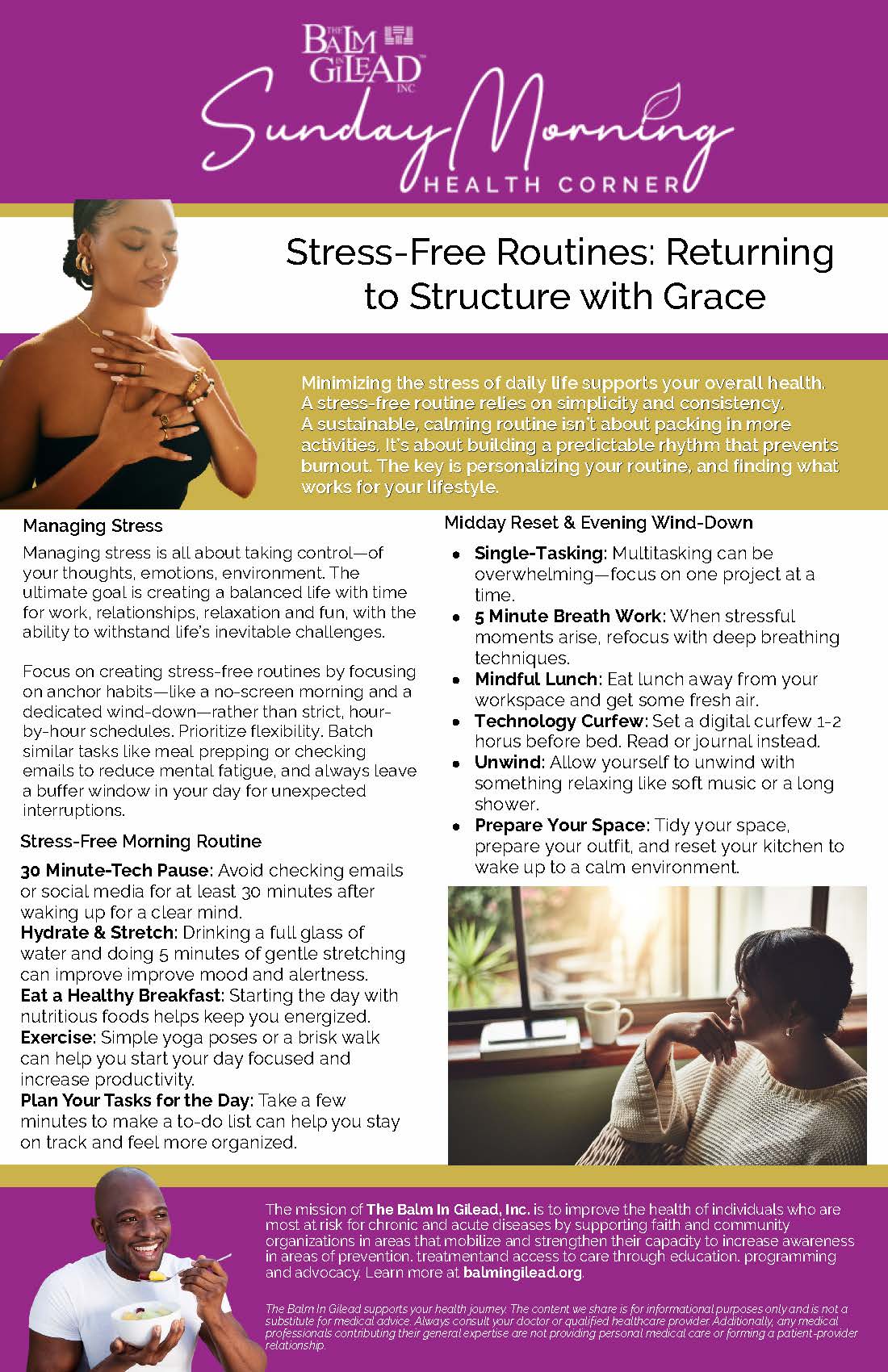
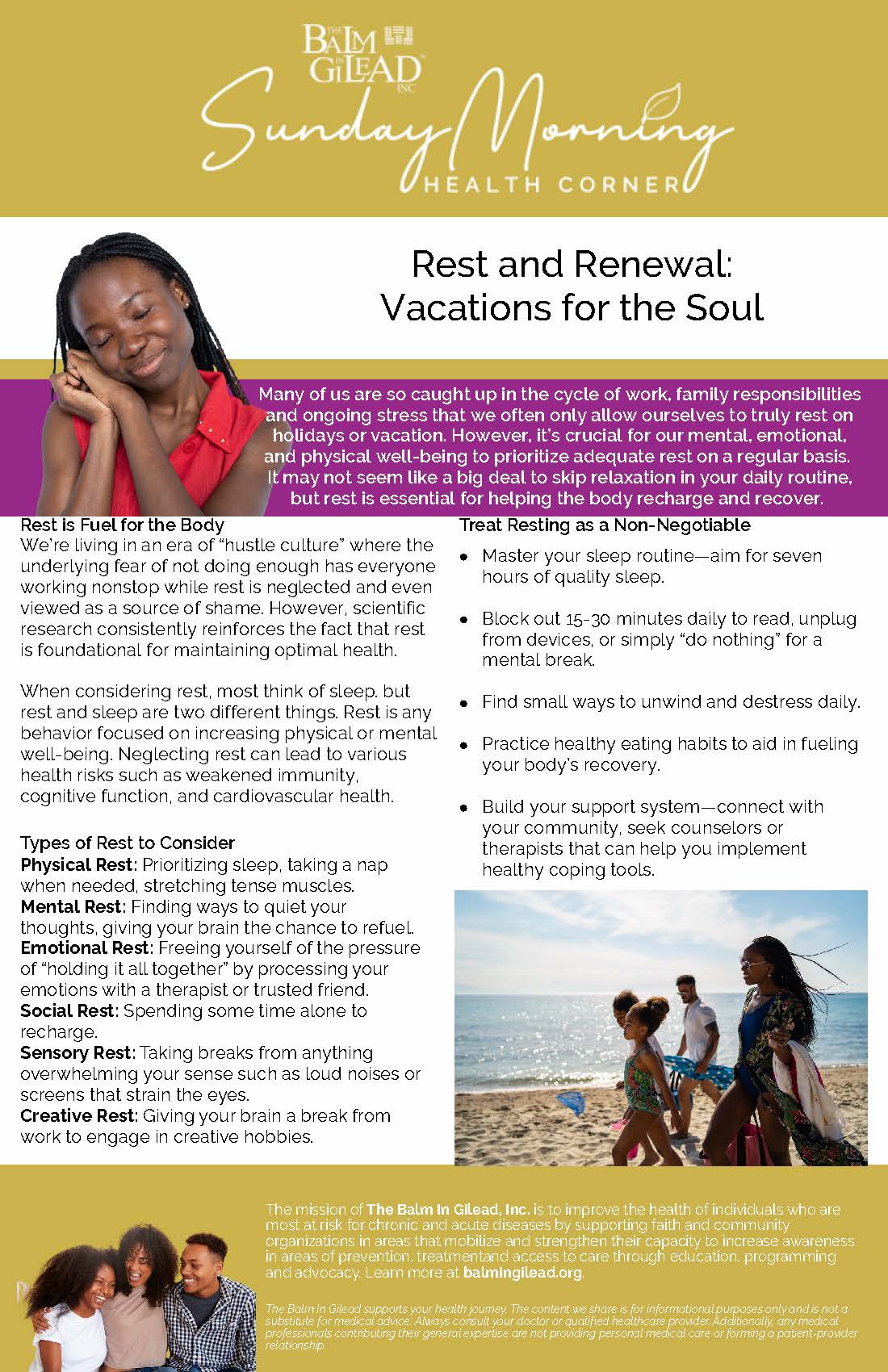
It's not just about diet or exercise—National Wellness Month is a reminder to slow down, prioritize yourself, and incorporate daily practices that prevent burnout and improve your overall quality of life.
Dimensions of Wellness
1. Physical Wellness
Lack of physical wellness causes many health problems. But even more so, neglecting physical health creates a negative cycle, contributing to mental health challenges. This negative feedback loop makes it more difficult to start and maintain healthy habits.
Focus on healthy habits to build physical wellness:
- Commit to 150 minutes of moderate-intensity exercise per week.
- Eat a nutrient-dense diet filled with a variety of whole foods.
- Get 7–9 hours of sleep each night.
- Schedule an annual physical with your primary care physician.
2. Emotional Wellness
Humans are wired for connection. Poor social wellness contributes to loneliness, isolation, and a lack of meaningful connections—potentially impacting relationships and overall well-being.
Social wellness and healthy habits are about quality, not quantity:
- Attend social events.
- Communicate openly and honestly.
- Connect regularly with a friend or family member.
- Cultivate strong relationships.
- Join a group fitness class.
- Practice active listening.
- Volunteer in your community.
3. Social Wellness
We are wired for connection. Poor social wellness contributes to loneliness, isolation, and a lack of meaningful connections—potentially affecting relationships and overall well-being.
Social wellness and healthy habits are about quality, not quantity:
- Attend social events.
- Communicate openly and honestly.
- Connect regularly with a friend or family member.
- Cultivate strong relationships.
- Join a group fitness class.
- Volunteer in your community.
4. Intellectual Wellness
The intellectual wellness dimension encourages curiosity, learning, and mental stimulation. Keeping your mind active and curious is like exercising your brain. This mental workout builds a strong cognitive reserve.
Build intellectual wellness to keep your brain sharp and resilient:
- Do a daily puzzle, brain game, or read a nonfiction book.
- Enroll in a continuing education course.
- Listen to a podcast on a topic outside your usual interests.
5. Spiritual Wellness
The human spirit is often neglected—a state known as spiritual distress or spiritual imbalance. This can manifest in various ways, impacting mental, emotional, and potentially even physical health.
- Allow yourself time alone with God.
- Explore spiritual texts, music, or traditions that inspire you.
- Pray.
- Spend time in nature.
Sustainable Holistic Health Changes for Big Impact
Improving your wellness doesn’t require an all-or-nothing overhaul. The most effective changes are often the smallest—and the most likely to be maintained.
The secret to mindset success is consistency. Over time, your choices compound, catalyzing noticeable improvements in your holistic health.
Integrate self-care strategies into your daily routine:
- Breathe deeply. Use mindful breathing to reduce stress in just minutes.
- Hydrate consistently. Set reminders to drink water throughout the day.
- Move your body every day. Even a 10-minute walk improves your mood and circulation.
- Practice gratitude. Write three things you're grateful for each morning or evening.
- Prioritize sleep. Set a consistent bedtime and create a calming nighttime ritual.
- Unplug intentionally. Set boundaries around screen time and social media.
This National Wellness Month, challenge yourself to set one wellness goal—something small but meaningful that supports your overall health. Maybe you’ll commit to walking 20-30 minutes a day, trying a new recipe each week, or getting together with a community that affirms and supports you. Here’s to our collective wellness!