
Health Education Resources

- Details
- Category: Health Education Resources
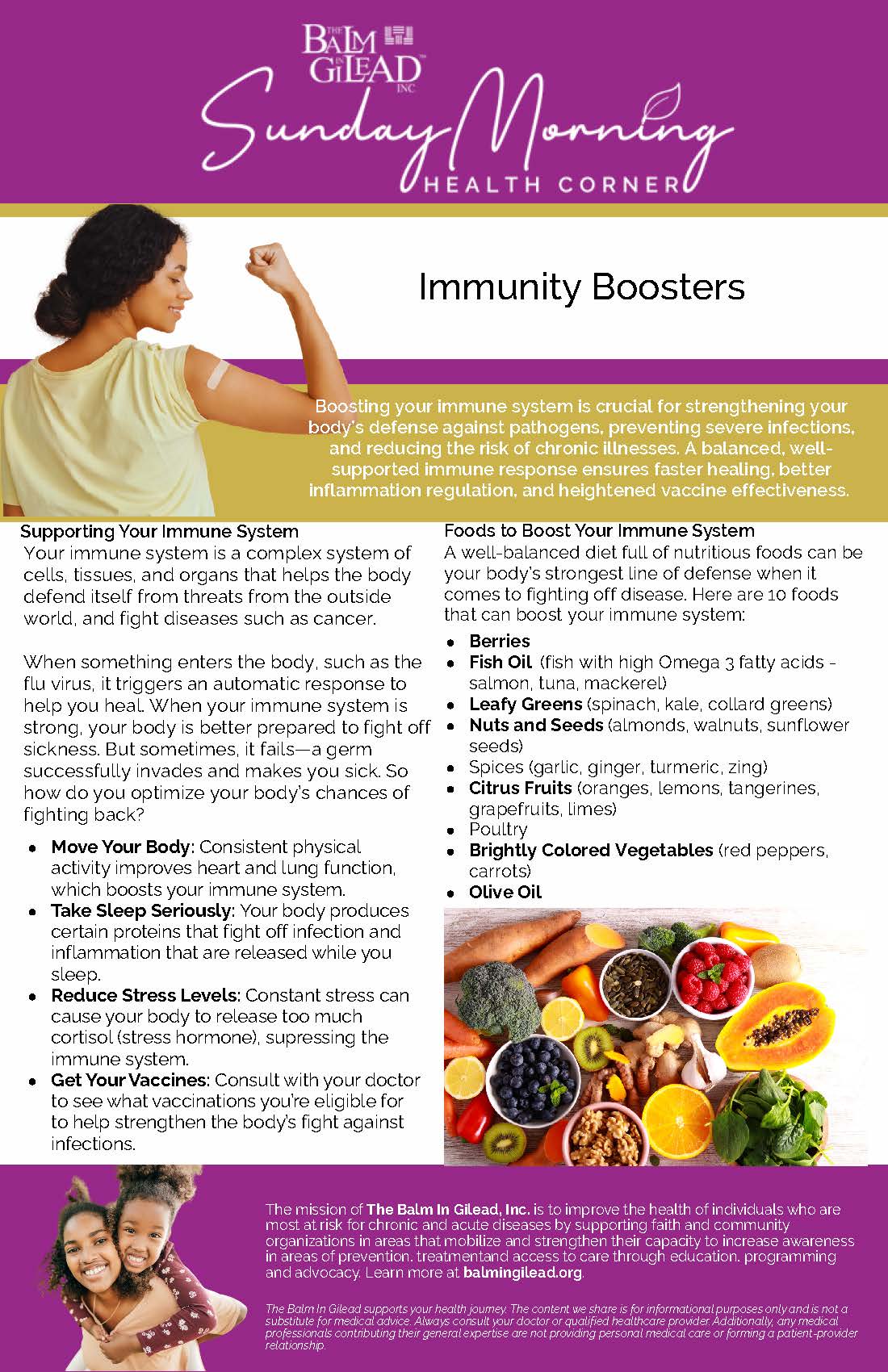
Get back on track with your immunizations.
August is National Immunization Awareness Month (NIAM). This annual observance highlights the importance of getting recommended vaccines throughout your life. We know that busy schedules can sometimes impact your ability to attend important appointments and receive routine vaccinations. During NIAM, we encourage you to talk to your doctor, nurse, or healthcare provider to ensure you and your family are protected against serious diseases by getting caught up on routine vaccination.
Both adults and children should stay up to date on their immunizations to stay healthy and prevent infection. The immune system is the body's defense system to keep you healthy. The immune system intersects with almost every aspect of human health and disease. When it is functioning correctly, it keeps you from getting sick. Vaccines are a way to train the immune system and establish memory ahead of time without the risk of infection, providing effective immunization against specific diseases. To learn more about the immune system and its relation to health, visit immunologyexplained.aai.org.
Why is it important to get regular immunizations, especially for children?
Vaccines are one of the most important advances in the history of medicine, preventing millions of deaths from diseases every year. Thanks to vaccines, once-feared diseases such as polio and measles are now rarer threats. Staying up to date on vaccines can protect both yourself and those around you by preventing the spread of disease. Vaccination is much safer than trying to develop natural immunity from a disease because some diseases can have lasting, damaging effects on your body.
Where can I learn more?
Information for Parents: https://www.cdc.gov/vaccines-children/index.html https://www.aap.org/en/patient-care/immunizations/
Vaccines for Adults: https://www.cdc.gov/vaccines-adults/index.html
- Details
- Category: Health Education Resources
Wellness as Wholeness: True Healing Lies in Liberation
"The Spirit of the Lord is upon me... He has sent me to proclaim freedom... recovery of sight... and to set the oppressed free."
— Luke 4:18
When Jesus proclaimed His mission in the synagogue, He offered more than a message of personal salvation. He revealed God's vision for human flourishing—one that restores the whole person and renews the whole community.
As we conclude BIPOC Mental Health Awareness Month, we are reminded that genuine wellness is about more than managing stress or treating illness. It is about reclaiming our God-given dignity, nurturing healthy relationships, and working toward communities where every person has the opportunity to thrive.
Both liberation theology and liberation psychology remind us that healing is never solely an individual journey. They invite us to recognize that our emotional struggles are often shaped by the realities of historical trauma, systemic inequities, and the daily burdens many communities continue to carry. Understanding these realities does not diminish personal responsibility; rather, it deepens our compassion—for ourselves and for one another.
For BIPOC communities, wellness means tending to the whole person—body, mind, and spirit—while drawing strength from faith, family, culture, and community. It means seeking support without shame, extending grace to ourselves, and believing that hope and healing remain possible.
As Allen Temple continues to embrace this year's theme, Living Triumphantly Through Christ, may we remember that Christ's triumph is not merely about enduring hardship, but about participating in God's ongoing work of restoration, justice, and abundant life.
This week, be gentle with yourself. Reach out to someone you trust. Rest when you need to. Celebrate your resilience. And remember: the desire to live freely, fully, and whole is a reflection of the God who created you.
Be well. Be free. Be whole.
- Details
- Category: Health Education Resources
"Do you not know that your body is a temple of the Holy Spirit? You are not your own; you were bought at a price. Therefore honor God with your bodies."
- 1 Corinthians 6:19-20 (NIV)
Summer in full swing means longer days, outdoor fellowship, and rising temperatures. One of the most powerful things we can do to protect our health this July costs nothing and takes only intention - drinking enough water every single day.
Dehydration sneaks up quietly. Fatigue, headaches, dizziness, and difficulty concentrating all signal that your body needs more water. For members managing blood pressure, diabetes, or kidney health - conditions that touch many families in our congregation - consistent hydration supports every system God designed within you.
This week, commit to these simple steps:
- Drink 6-8 glasses of water daily - start your morning with a full glass before coffee or tea
- Carry a reusable water bottle to Sunday service, errands, and family gatherings
- Check on your elderly neighbors and fellow members during heat advisories
- Eat water-rich foods - watermelon, cucumbers, oranges, and strawberries all count
Want to learn more?
🔗 CDC Nutrition & Hydration Tips: cdc.gov/nutrition
🔗 American Heart Association Heat Safety: heart.org
🔗 National Medical Association: nmanet.org
- Details
- Category: Health Education Resources
UV Eye Health Awareness Month is a year-round campaign focused on protecting eyes from harmful ultraviolet (UV) radiation, but it’s especially important for people of color because darker pigmentation can make UV damage less visible, increasing the risk of long-term eye problems.
Why UV Protection Matters for the Black Community
- Higher UV exposure risk: People with darker skin tones have more melanin, which can absorb UV light, but this also means UV rays can penetrate deeper into the eye, potentially causing damage to the lens, retina, and cornea.
- Hidden damage: Because of our melanin-rich skin, UV damage to the eyes can be subtle and go unnoticed until it’s advanced.
- Preventable conditions: Prolonged UV exposure without protection can contribute to cataracts, macular degeneration (damage to the central part of the retina), photokeratitis (sunburn of the cornea), and other vision loss risks.
Key Protective Measures
To safeguard your eyes during UV Eye Health Awareness Month and year-round:
- Wear sunglasses that block 100% of UVA and UVB rays; wrap-around styles offer the best coverage.
- Use UV-protective contact lensesif needed, especially for sports or outdoor work.
- Seek shade between 10 a.m. and 4 p.m., when UV radiation is strongest.
- Wear protective clothing such as wide-brimmed hats and UV-protective sunglasses.
- Use broad-spectrum sunscreen (SPF 30 or higher) on exposed skin, as UV rays can reflect off surfaces like water and sand.
- Encourage children and teensto wear hats and sunglasses when outdoors.
- Promote regular eye examsto detect early signs of UV-related eye damage.
Sources: American Academy of Dermatology, American Academy of Ophthalmology, The Vision Council Foundation
- July 2026 - Bebe Moore Campbell Minority Mental Health Awareness Month
- June 2026 - Alzheimer's Awareness Month - Denial Is Not Just a River in Egypt
- June 2026 - A Love Letter to Our Fathers and Father Figures: Take Care of Your Health, Please!
- June 2026 - Alzheimer’s & Brain Awareness Month: Memory Sunday
- June 2026 - Alzheimer's & Brain Awareness Month