
Health Education Resources

- Details
- Category: Health Education Resources
"Then the Lord God formed man of the dust of the ground, and breathed into his nostrils the breath of life..." — Genesis 2:7
May is Mental Health Awareness Month—a time to recognize that emotional wellness, mental wellness, and spiritual wellness matter.
Many of us live carrying layers of stress—personal pain, survival mode, and the weight of what is happening around us. Sometimes our bodies stay on guard so long that we begin holding our breath without even realizing it. We breathe from our chest rather than deep in our diaphragm because our nervous system has learned to stay on high alert rather than relaxed. This is not weakness. It is the body’s attempt to protect us.
Over time, this can contribute to tension, anxiety, fatigue, irritability, sleep disturbances, and emotional overwhelm.
Yet God designed our bodies with a built-in pathway toward calming and restoration.
💛 Understanding the Breath and the Body
Place one hand on your chest and the other on your abdomen. As you breathe, notice which hand moves most.
If the chest rises more than the abdomen, you may be breathing primarily from the chest—a pattern commonly associated with stress and nervous system activation. Diaphragmatic breathing, where the abdomen gently rises, encourages fuller oxygen exchange and helps signal safety to the body.
Deep breathing activates the vagus nerve—the body’s built-in calming system—and helps move us from fight-or-flight toward regulation, restoration, and rest.
The vagus nerve is part of the parasympathetic nervous system, which helps regulate heart rate, digestion, emotional regulation, and the body’s ability to recover after stress. When activated through slow, intentional breathing, it sends a message throughout the body: "You are safe enough to soften."
💛 Breathing Exercise for Regulation and Peace
Try this simple breathing exercise:
- Place one hand on your chest
• Place one hand on your abdomen
• Slowly inhale through your nose for 4 counts
• Allow the abdomen to rise first
• Hold gently for 4 counts
• Slowly exhale through your mouth for 6 counts
• Repeat 3–5 rounds
Mental health matters. Rest matters. Healing matters.
Sometimes healing begins not with doing more—but with reconnecting to the very breath God first gave us. Because healing begins when the body no longer feels it has to fight alone.
Resource: Different types of breathing exercises (1) Daily Breathing - YouTube
Submitted by:
Rochele Henderson, Registered Associate Marriage Family Therapist
Axis Mundi Center for Mental Health
- Details
- Category: Health Education Resources
The Healing Power of Connection in Black Community Spaces
There’s a certain kind of exhale that happens in familiar spaces. The barbershop chair turning toward the mirror. The steady rhythm of a weekend run club. The group chat that’s been alive for years. Before anyone names it as mental health support, something regulating is already happening. Black community mental health often focuses on therapy, but for many Black folks, healing has never lived only inside therapy offices. It has always lived in community.
Why Community Matters for Black Mental Health
As Nekolas Milton, PsyD, a psychological associate at Deeper Than Color, explains, “We are social beings. We are communal beings.” Because of this, he encourages people to connect with others based on the activities they already enjoy. Spaces like barbershops, fitness groups, book clubs, and gaming communities often provide real emotional benefits: being seen, feeling understood, and experiencing belonging in ways that are culturally familiar and accessible.
At the same time, Dr. Milton also emphasizes that growth sometimes requires stepping outside our usual circles. Being “comfortable with being uncomfortable” might mean trying a new group or joining a different kind of community.
Building Healthy Community Spaces
Dr. Milton also names something that can quietly undermine these spaces: competition and comparison. When we enter community environments sizing each other up or treating connection like a performance, the benefits shrink quickly. As he reminds us, not everything has to be a competition, and comparison can easily steal the joy that makes these spaces healing in the first place.
Part of using community well is being intentional about why you’re there and approaching these spaces as places for growth, learning, and mutual support rather than judgment or competition.
Community Support vs. Therapy: What’s the Difference?
Importantly, despite the social and emotional benefits of community groups, they are not the same as professional therapy. Dr. Milton highlights that one key difference is the directionality of relationships in non-therapy social settings. As he explains, friendships and communal spaces are typically bi-directional. Everyone shares and everyone supports one another.
Therapy, by contrast, creates a rare unidirectional space that is fully centered on you. As Dr. Milton puts it, therapy offers dedicated time where you don’t have to manage anyone else’s needs, perform strength, or balance the emotional exchange. For many individuals who are used to pushing outward and staying in motion, that kind of focused space can be transformative.
Resources
Looking for mental health support in Alameda County? Need a therapist who gets you without having to code-switch? Here, you will be able to find culturally relevant care, support, events, and more. These resources are created for Black residents of Alameda County. They’re local, accessible, and culturally relevant.
- Alameda County Behavioral Health Department
- Beats, Rhymes, and Life
- Black Girls Mental Health Collective
- Building Opportunities for Self Sufficiency (BOSS)
- Create the Space
- Deeper Than Color
- Felton Institute
- Greater New Beginnings
- Healthy Black Families
- Kingmakers of Oakland
- Pathways to Wellness
- PEERS
- Pursuit of Peace Painting
- PranaMind
- Roots Community Health
- THUG Therapy
Source: Outside Feelings – Mental Health Thrives in Community
- Details
- Category: Health Education Resources
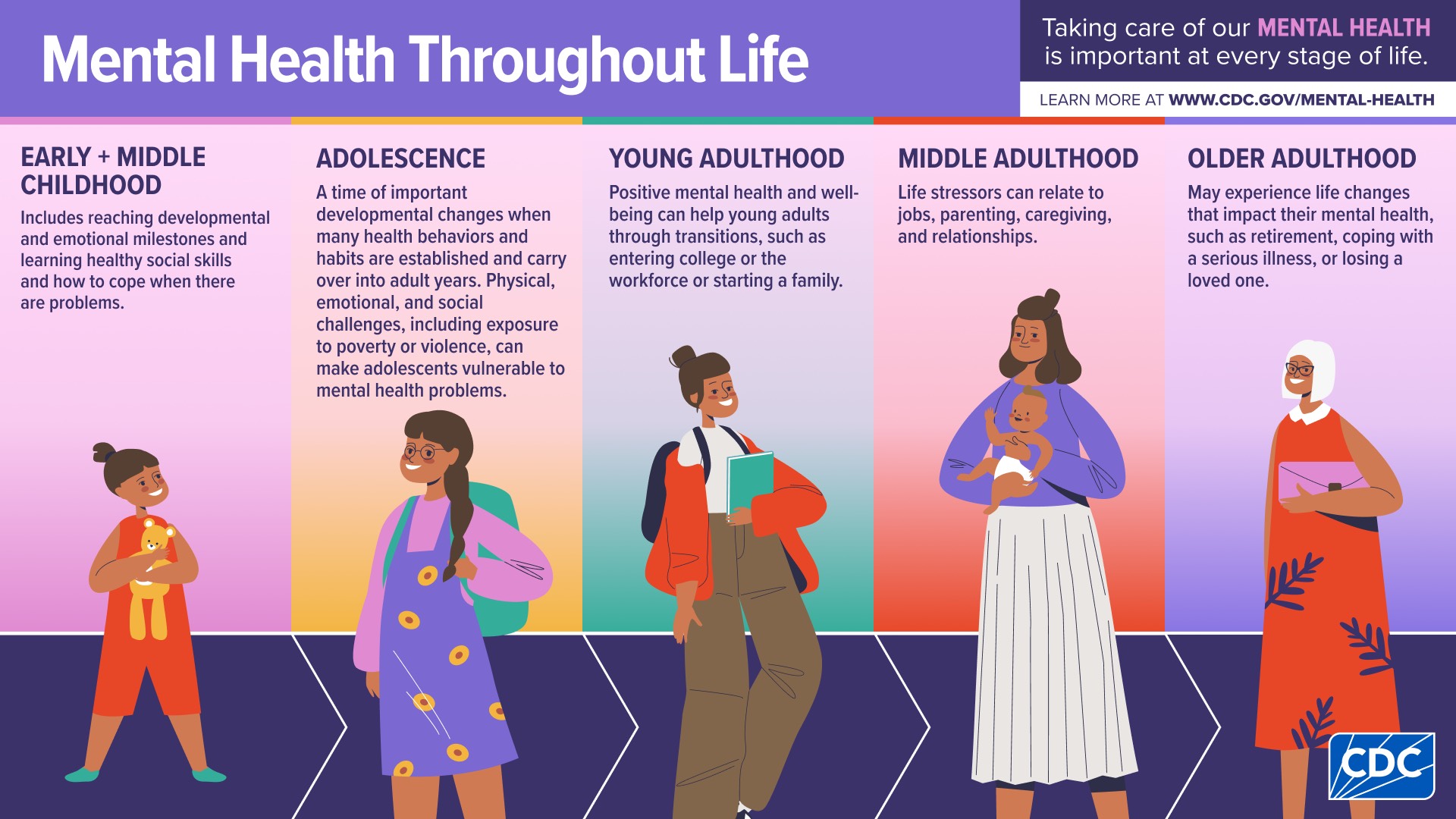
- Early and middle childhood (birth-11 years old): Mental health in childhood includes reaching developmental and emotional milestones and learning healthy social skills and how to cope when there are problems. Children who experience good mental health have a positive quality of life and can function well at home, in school, socially, and in their communities.
- Adolescence (12-17 years old): Adolescence is a unique and formative time when many health behaviors and habits are established and carry over into adult years. Adolescence is also a time of important developmental changes. Physical, emotional, and social challenges, including exposure to poverty or violence, can make adolescents vulnerable to mental health problems.
- Young adulthood (18-26 years old): Early adulthood can come with major transitions such as entering college and the workforce, securing housing, or starting a family. Positive mental health and well-being in young adulthood can help young people meet these transitional changes successfully.
- Middle adulthood (27-64 years old): In middle adulthood, adults may face life stressors related to jobs, parenting, caregiving, and relationships.
- Older adulthood (65+ years old): As people age, they may experience life changes that impact their mental health, such as retirement, coping with a serious illness, or losing a loved one. Some may experience feelings of grief, social isolation, or loneliness.
- Details
- Category: Health Education Resources
Mental Health Awareness Month is observed every May to promote mental wellness, reduce stigma, and provide resources for individuals and communities.
Mental Health Awareness Month was established in 1949 by Mental Health America (MHA) to highlight the importance of mental health and wellness in everyday life and to celebrate recovery from mental illness. It serves as a dedicated time for individuals, organizations, and communities to raise awareness, educate the public, and advocate for better mental health care and support.
This year’s theme — More Good Days, Together — encourages us all to reflect on what a “good” day looks like, both for ourselves, and for our communities. Together, we can use that insight to connect people to the right support at the right time, and shape advocacy, education, and community engagement to make more good days possible for all.
As we continue in our Six Week Prayer Challenge, please consider adding the following to support of your mental health:
- Philippians 4:6-7 encourages believers not to be anxious but to present their requests to God through prayer and thanksgiving, promising that His peace will guard hearts and minds in Christ Jesus.
- Isaiah 26:3 highlights that God keeps in perfect peace those whose minds are steadfast and trust in Him.
- John 14:27 reminds us that God’s peace is a gift unlike the world’s, urging believers not to be troubled or afraid.
- 1 Peter 5:7 instructs casting all anxieties on God because He cares for us, reinforcing reliance on His care.
Source and Resources: Mental Health America
Journaling helps us process our experiences and recognize the good in everyday life that we often overlook. Beyond the emotional benefits, the physical act of writing is good for your brain and supports learning and memory. Journal prompts for more good days
Affirmations are statements you say or think to yourself that reinforce what matters to you and who you want to be. They remind you that you are strong and help you focus on your values and on what makes you feel calm and confident. Affirmations for more good days and why they work
- April 2026 - The Black Church and Autism Awareness
- April 2026 - National Stress Management Month
- April 2026 - Rooted in Justice & Joy: Honoring Black Maternal Health and Minority Health Month
- March 2026 - Hydration Is Healing: The Power of Water for Body & Brain
- March 2026 - Colorectal Cancer Awareness Month